
You may never see the gecko. What you notice first is a small dark mark on a wall, a chirp from the ceiling at night, or tiny white shells behind the sofa. These are the classic signs of geckos in a house, and they are easy to confuse with rat, mouse or cockroach droppings.
This guide shows you what gecko droppings look like, how to spot gecko eggs, why geckos chirp at night and what each sign means, so you know whether you can handle it yourself or need an inspection.
Quick answer: Gecko droppings are small, elongated and brownish, usually with a white tip. Eggs are small, white and oval, often hidden in pairs in crevices. Chirping at night is normal gecko behaviour. One or two signs near a window is minor. Droppings in several rooms or near food means geckos are settled in your home.
What Do Gecko Droppings Look Like?
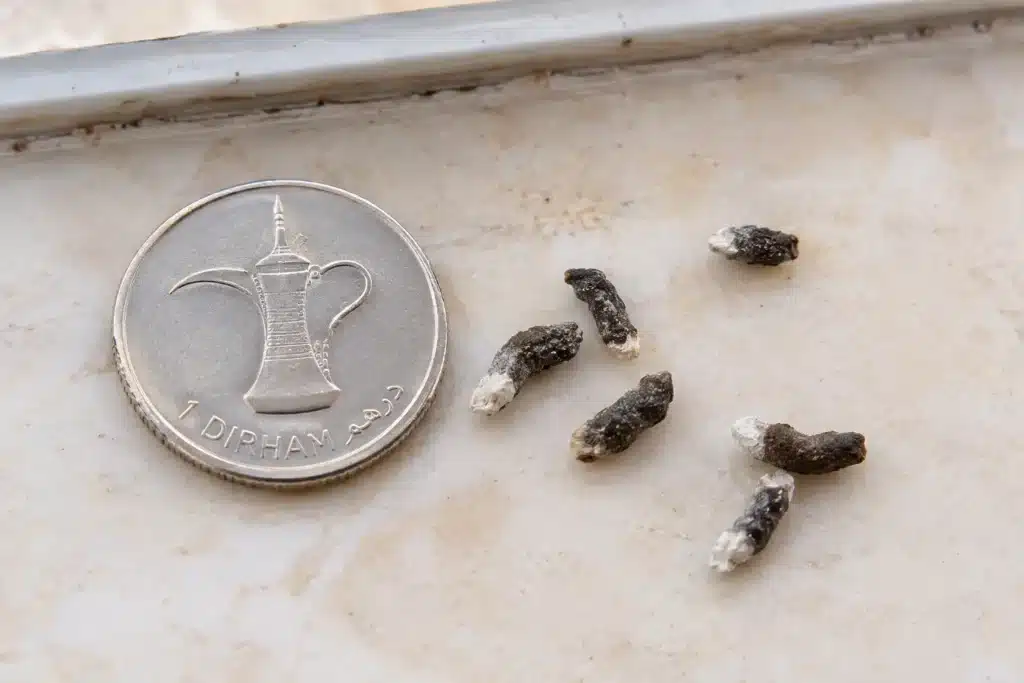
Gecko droppings are small, elongated and brownish, and they are often tipped with white. The white part is the gecko’s urine waste, not mould. According to a Texas A&M extension fact sheet on house geckos, the droppings can also stain fabrics, carpets, walls and curtains.
Where You Will Find Them
Geckos hunt insects, so droppings appear where the insects are:
- Near lights and windows, where moths and flies gather
- On kitchen counters, walls and behind appliances
- Behind picture frames, cupboards and curtains
- On window sills, balcony floors and AC pipe areas
- In garages and storerooms
You will often find them in the same few spots, because geckos return to the same hunting places every night.
Gecko Droppings vs Rat, Mouse and Cockroach Droppings
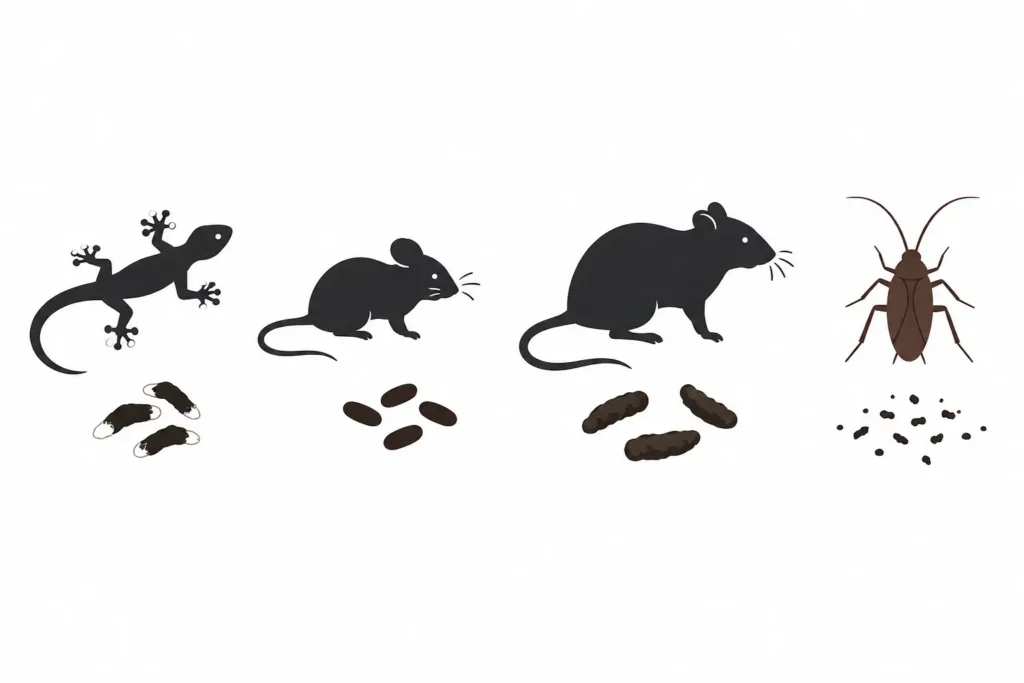
Droppings from different pests overlap in size and colour, so look at the shape and the place:
| Pest | What the droppings look like | Where they appear | Next step |
|---|---|---|---|
| Gecko | Small, elongated, brownish or dark with a white tip | Walls, windowsills, under lights, behind furniture | Seal gaps and cut insects |
| Mouse | Very small, dark, pointed at the ends, like grains of rice | Along walls, inside cupboards, behind appliances | See rat and rodent control |
| Rat | Larger, capsule-shaped, up to about 1 to 2 cm | Along walls, ceilings, bins, storerooms | Read how pest control gets rid of rats |
| Cockroach | Tiny specks like ground pepper or coffee grounds, or small cylinders from large roaches | Corners, cabinet hinges, near sinks and appliances | See our cockroach guide for Dubai |
If you cannot tell, take a clear photo with something for scale, such as a coin, and send it to us on WhatsApp. Do not touch droppings with bare hands.
Gecko Eggs: What They Look Like and Where They Hide
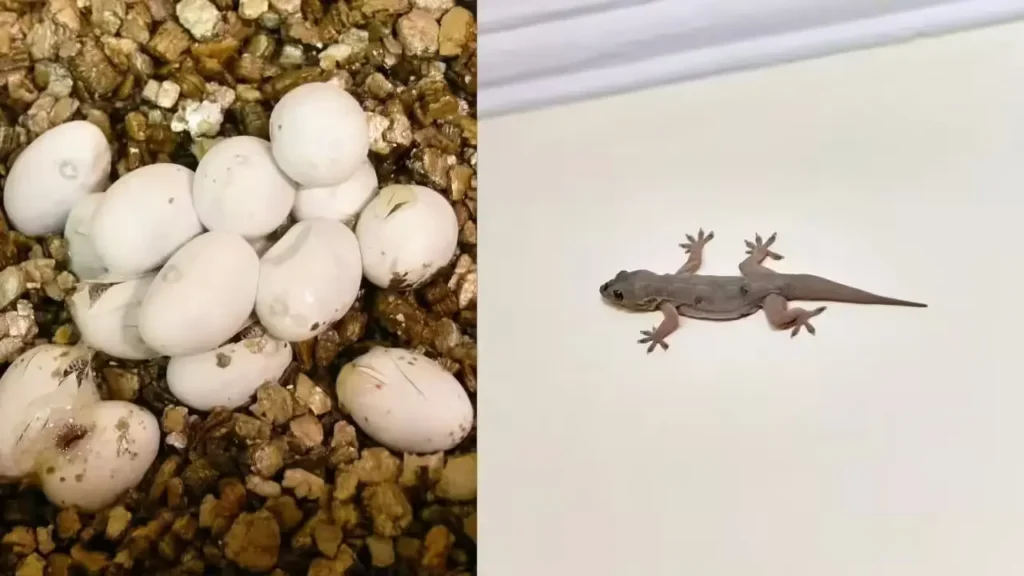
Gecko eggs are small, white and oval. House geckos usually lay them in sheltered, hidden places, often two at a time, and a female can lay several clutches in a season. You are most likely to find them:
- Behind furniture, pictures and wall units
- In cracks, crevices and gaps in walls
- Behind AC units and in storerooms
- In plant pots and garden furniture
Broken, empty shells are a sign that young geckos have already hatched. If you find eggs or empty shells indoors, geckos are breeding in your home, and removing the single gecko you see will not solve it.
Why Are Geckos Chirping at Night?
If you hear short chirps or clicks from a wall or ceiling after dark, it is almost certainly a gecko. House geckos make these sounds, usually at night, when they are active and hunting. The gecko noise is harmless, and it often comes from the same spots near lights where insects gather. Regular chirping from inside walls, the ceiling or kitchen units means geckos are living or hunting inside your home, not just passing through.
Other Signs of Geckos in Your House
- Shed skin found in corners, cabinets or behind furniture
- Stains on curtains, walls or sofas from droppings
- A gecko in the same spot every night, often near a light or the fridge
- Pets staring at or chasing something on a wall or ceiling
- A lot of small insects around your lights, which is what the geckos are eating
What Do the Signs Mean?
| What you notice | What it likely means | What to do |
|---|---|---|
| One or two droppings near a window or balcony | A gecko passing through | Clean up, seal gaps, switch off unneeded lights |
| Droppings in several rooms | Geckos are living inside | Seal entry points and reduce insects, then ask for an inspection if it continues |
| Droppings on counters or near food | A hygiene risk | Clean safely, cover food and book an inspection |
| Eggs or empty shells indoors | Geckos are breeding | Book an inspection soon |
| Chirping from inside walls or ceilings every night | A settled population | Book an inspection |
What Are These Called in Arabic?
Many people in the UAE use Arabic words for these animals and signs. Here are the common terms in English and Arabic. Local words can differ between families and emirates.
| English | Arabic | Notes |
|---|---|---|
| Gecko | أبو بريص (abu burays) / وزغة (wazagha) | The usual words for a house gecko |
| Lizard (general) | سحلية (sahliya) | Also used for agamas, skinks and sand lizards |
| Spiny-tailed lizard (dhub) | ضب (dhab) | A desert lizard, not a house gecko |
| Desert monitor | ورل (waral) | A large desert lizard, not a house gecko |
| Gecko droppings | فضلات أبو بريص | Small, elongated, with a white tip |
| Gecko eggs | بيض أبو بريص | Small, white and oval |
| Gecko sound | صوت أبو بريص | Short chirps or clicks at night |
| Mouse / Rat | فأر / جرذ | Compare the droppings in the table above |
| Cockroach | صرصور | Plural: صراصير |
| Pest control | مكافحة الحشرات |
If you want to send us a photo and describe the problem in Arabic, you can write to us on WhatsApp.
Can Gecko Droppings Make You Sick?
Geckos are not venomous, and they do not spread disease the way rats or mosquitoes can. The concern is hygiene: droppings left on surfaces where food is prepared. This is general information, not medical advice.
Salmonella
Reptiles often carry Salmonella bacteria in their gut and pass them out in droppings, even when they look healthy and clean. The CDC explains this in its guide on reptiles and amphibians. The germs can end up on counters, chopping boards and utensils. You can get sick by touching those surfaces and then your mouth or food, and the usual result is a stomach illness such as diarrhoea.
Other Germs and Bites
The CDC also lists Aeromonas and Mycobacterium marinum among the diseases reptiles can spread. These matter mostly for people who keep reptiles and handle their tank water. A house gecko bite is rare and weak, but wash any bite with soap and warm water, and see a doctor if it becomes red, swollen or painful.
Who Is at Higher Risk?
Children under 5, adults over 65 and people with weak immune systems are more likely to get seriously ill from these germs. If one of them lives in your home, keep them away from droppings and clean any you find at once. We cover the kitchen side in our guide to the hygiene risks of lizards near food.
How to Clean Gecko Droppings Safely
- Wear disposable gloves.
- Pick up the droppings with a paper towel. Do not sweep or vacuum dry droppings, which spreads dust.
- Disinfect the surface and let it sit for the time on the label.
- Put the paper and gloves in a sealed bag and throw them away.
- Wash your hands with soap and water.
- Wash fabrics that were stained, using the hottest setting the fabric allows.
Reptiles can carry germs such as Salmonella in their droppings. The CDC explains this in its guide on reptiles and amphibians. For more on the hygiene risks of lizards in kitchens, read our guide to the hygiene risks of lizards near food.
How to Get Rid of Geckos at Home (and Keep Them Out)
Geckos leave when your home stops offering food and shelter. Follow these steps in order:
Clean and check again. Clean droppings with gloves and disinfectant, then check the same spots every few days for two weeks. New droppings mean you missed an entry point or the insects are still there.
Find where they are. Use the signs above (droppings, eggs, chirping) to map their hiding spots and routes. Check behind appliances, picture frames and near lights.
Cut off their food. Geckos hunt insects, so reduce flies, moths and cockroaches. Cover food, empty bins daily and fix leaks. For flies, see our fly pest control guide, and for ants, our ants pest control page.
Seal the gaps. Close openings around AC pipes, cable holes, doors and windows with sealant or metal mesh. Fit insect screens.
Change your lighting. Move bright lights away from doors and windows, and turn off outdoor lights you do not need at night. Less light means fewer insects and fewer geckos.
Remove hiding places. Clear clutter behind furniture and in storerooms, and move plants and climbing vines away from walls.
Release single geckos gently. Place a cup over it, slide a card underneath and let it go outside, away from your door.
What Not to Do
- Do not use glue traps. They can injure the animal and are hard to clean up.
- Do not use mothballs or strong chemicals indoors. They can harm children and pets and do not fix the cause.
- Do not spray pesticide near food.
- Do not rely on home remedies such as garlic, onion or citrus peels. There is no reliable proof that they remove geckos, and they do nothing about insects or gaps.
If you still see new droppings, eggs or chirping after two weeks, the problem is bigger than a DIY fix, and it is time to book an inspection.
How to Stop Geckos Coming Back
- Cut the insects. Cover food, empty bins daily and fix leaks. For flies, see our fly pest control guide.
- Seal gaps around AC pipes, doors, windows and cable holes.
- Reduce outdoor lighting near doors and windows at night.
- Clear clutter behind furniture and in storerooms.
- Check what else is living there. Our Dubai insects guide helps you identify other insects.
When to Book a Professional Inspection
Call Dominator Pest Control if you find:
- Droppings in several rooms or on kitchen counters
- Eggs or empty shells indoors
- Chirping inside walls or ceilings every night
- Signs that keep coming back after you have cleaned and sealed gaps
- A restaurant, cafe, shop or food store with droppings near food. See our industry expertise page
Our technician inspects the property, finds how the geckos get in and what they are feeding on, and recommends the treatment. See our lizard pest control service for how we handle it. You can also check our prices or ask about regular visits through our pest control AMC.
Call +971 56 968 6078 | WhatsApp | Email: info@dominator.ae | Contact us
Related Guides
- Villas: Villa pest control in Dubai
- Apartments: Apartment pest control in Dubai
- Insects that feed geckos: Fly pest control at home and ants pest control
- Other droppings: Cockroach guide for Dubai and how pest control gets rid of rats
FAQs About Signs of Geckos in the House
What do gecko droppings look like?
Small, elongated and brownish or dark, usually with a white tip. They are often found near lights, windows, walls and behind furniture.
What is a gecko called in Arabic?
A gecko is called أبو بريص (abu burays) or وزغة (wazagha). Gecko droppings are فضلات أبو بريص and gecko eggs are بيض أبو بريص. A lizard in general is a سحلية (sahliya).
Are gecko droppings dangerous?
They can carry germs such as Salmonella, so avoid touching them with bare hands. Wear gloves, disinfect the surface and wash your hands afterwards.
How can I tell gecko droppings from rat droppings?
Gecko droppings usually have a white tip and are found on walls and near lights. Rat droppings are larger and capsule-shaped, found along walls, in ceilings and near bins. If you are not sure, send us a photo.
What do gecko eggs look like?
Small, white and oval, often found in pairs in hidden, sheltered places such as behind furniture or in wall cracks.
Why do geckos chirp at night?
Geckos make short chirps and clicks while they are active and hunting at night. It is normal and harmless, but regular noises from inside walls mean they are living indoors.