
Most of us don’t think twice about a spider in the corner of the ceiling. Then someone mentions black widow or brown recluse, and suddenly every eight-legged visitor looks suspicious.
Here’s the honest picture: venomous spiders are far fewer than people fear, but the few that matter are worth knowing by sight. And a quick correction before we start. Spiders are venomous, not poisonous. Poison harms you if you eat or touch it. Venom is injected, and spiders do that with their fangs. People still search for poisonous spiders all the time, so we’ll cover that question too.
This guide explains how to tell if a spider is dangerous, which species deserve your attention, what to do after a bite, and when it’s smarter to call a professional spider control team than to deal with it yourself.
How Can You Tell If a Spider Is Venomous? (Venomous vs Poisonous Spiders)
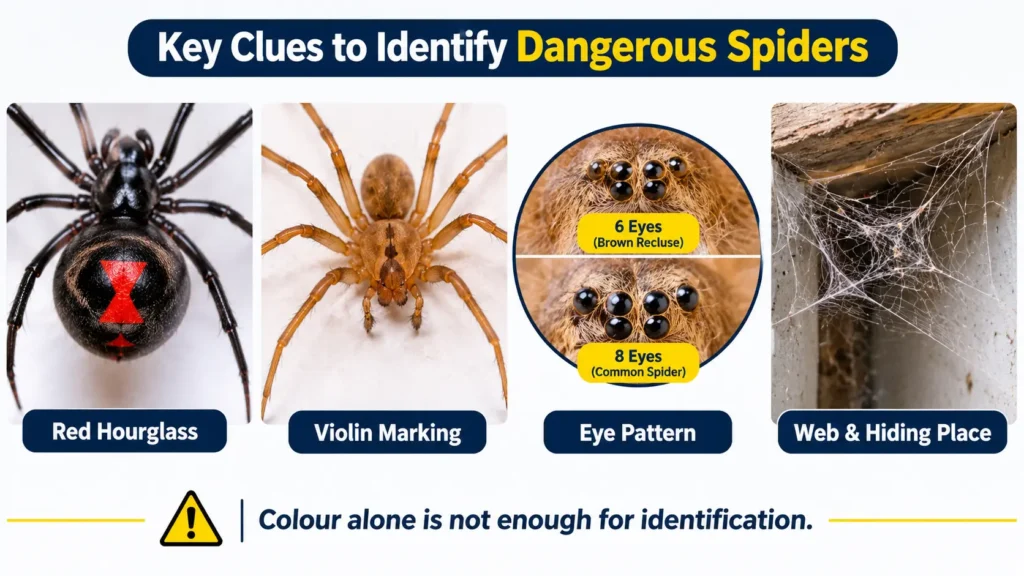
Almost every spider has venom. It’s how they subdue prey. The real question is whether a spider’s venom is medically significant to humans, and that’s true for only a small handful of species.
There is no single trick that works every time, but these clues help:
- Distinct markings. A red or orange hourglass on the belly points to a widow. A dark violin-shaped mark on the back points to a recluse.
- Body shape and size. Widows have round, shiny abdomens and thin legs. Recluses are slim, tan to brown, with uniform legs.
- Eye pattern. Recluses have six eyes in three pairs, while most spiders have eight. You need a magnifier to see this, so don’t try it up close.
- Web style. Widows build messy, tangled cobwebs close to the ground. Recluses leave loose, irregular silk in hidden spots.
- Behaviour. Dangerous spiders are usually shy. They bite when pressed against skin, for example in a shoe, a glove or folded clothing.
One warning: colour alone can mislead you. Plenty of harmless brown spiders get mistaken for recluses every day. If you’re unsure, take a clear photo from a safe distance and don’t handle the spider with bare hands. Our technicians can identify it for you.
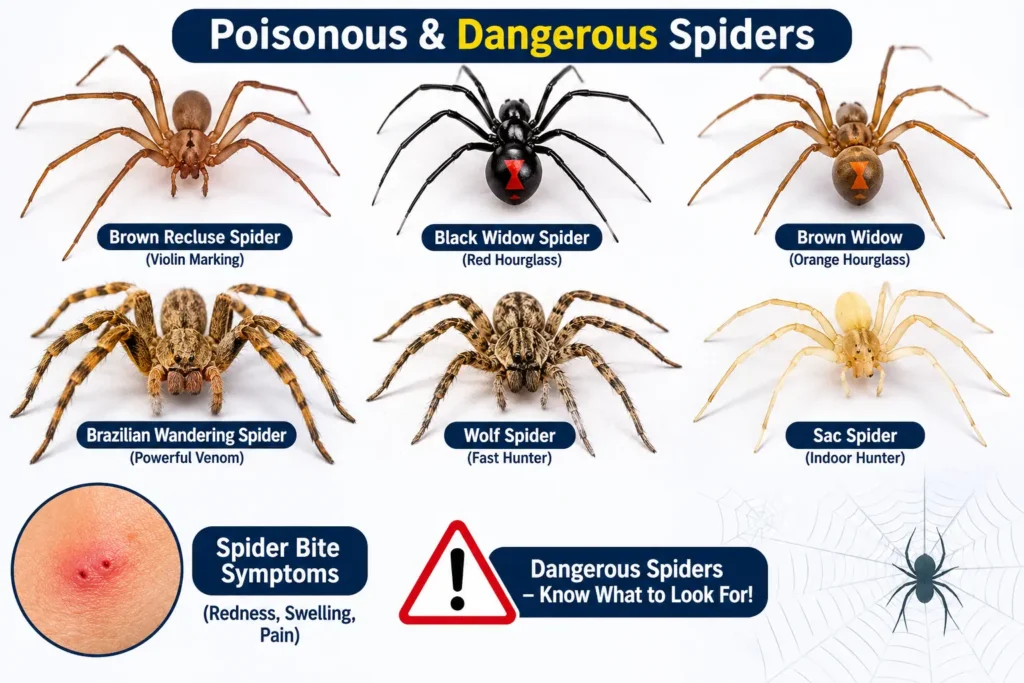
What Are the Most Venomous Spiders in the World? Identification Guide
Here are the species people ask about most, what they look like, and how worried you really need to be.
Brown Recluse Spider: Violin Marking, Bite Symptoms & Where It Lives
The brown recluse (Loxosceles reclusa) is tan to dark brown, about the size of a coin including legs, with a violin-shaped marking on its back. It is native to the central and southern United States, and it earns its name: it hides in dark, undisturbed places like boxes, closets and behind furniture.
Most bites are mild. In some cases the venom damages skin tissue and leaves a slow-healing sore, so any bite with spreading redness, a blister or intense pain should be checked by a doctor. Related recluse species exist in other parts of the world, which is another reason accurate identification matters more than guessing.
Black Widow Spider (and Brown Widow): Red Hourglass Identification
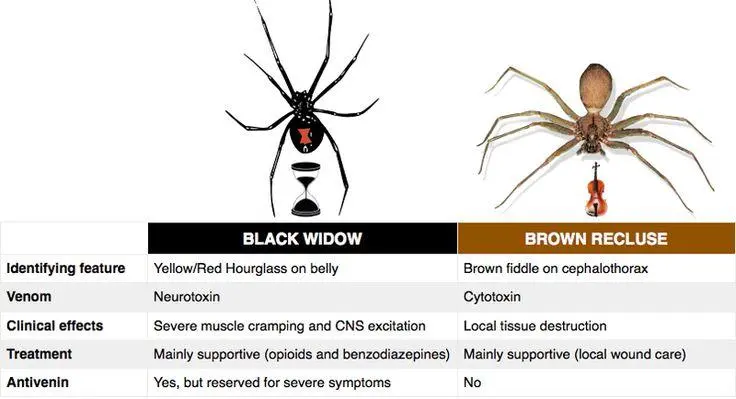
The black widow (Latrodectus) is easy to recognise. Adult females are glossy black with a red hourglass on the underside of the abdomen. Their venom affects the nervous system, and a bite can cause severe muscle cramps, sweating, nausea and pain that spreads from the bite site. Serious cases are uncommon and respond well to medical treatment, but children, older adults and people with heart conditions should always get checked.
The brown widow is a close relative. It is tan to brown with an orange hourglass and lays distinctive spiky egg sacs. It has spread to warm climates around the world. Brown widows are generally less dangerous than black widows, but they should still be treated with respect.
Sac Spider: Pale, Fast Night Hunter
Sac spiders (Cheiracanthium) are small, pale yellow to beige, and build silk “sacs” in corners, window frames and ceiling edges where they rest during the day. They hunt at night and sometimes bite when trapped in bedding or clothes. The bite is typically painful with local redness and swelling. Because they live indoors, they’re one of the most common spiders found in homes.
Brazilian Wandering Spider: Powerful Venom, Rare Encounters
The Brazilian wandering spider (Phoneutria) is often called the world’s most venomous spider. It is large, hairy, and doesn’t build a web. It roams the forest floor of Central and South America. Its venom is potent, yet deaths are rare thanks to antivenom. Outside its native range, encounters are very unusual, and the occasional stories of one arriving in a shipment of fruit make headlines precisely because they’re so rare.
Wolf Spider: Scary Look, Mild Bite
Wolf spiders (Lycosidae) are brown, hairy and fast, which is why people panic. They don’t spin webs to catch prey; they hunt on the ground. Females carry their egg sac on their body and, later, the babies on their back. A bite can hurt and swell, but wolf spider venom is not considered dangerous to most healthy people. They are frequently confused with recluses, and they are among the spiders homeowners most often find in gardens and ground-floor rooms.
Are Dangerous Spiders a Risk in Dubai and the UAE?
Let’s keep this honest. Black widows and brown recluses are not typical household spiders in the UAE. Most spiders found in homes here are harmless species such as huntsman, jumping and house spiders, along with wolf spiders and the occasional sac spider. You can read about them in our guide to spiders found in Dubai.
Still, global trade, imported plants and stored cargo can carry unexpected species. And a harmless spider that looks dangerous can cause real stress, especially in homes with children. That’s why a professional inspection is the fastest way to know what you’re dealing with. For the wider picture of what lives around Dubai homes, see our Dubai insects guide.
How to Prevent Venomous Spider Bites at Home
Prevention is mostly about removing hiding places and food.
- Declutter storage areas. Move boxes off the floor and use sealed plastic bins instead of cardboard.
- Seal entry points. Fix gaps around doors, windows, pipes and AC ducts. Add door sweeps and fine mesh screens.
- Shake before you wear. Check shoes, gloves, towels and outdoor clothing before putting them on.
- Vacuum webs and egg sacs regularly, especially in garages, balconies, wardrobes and behind furniture.
- Reduce their food. Spiders follow insects. Controlling ants, cockroaches and flies means fewer spiders. See our ant control guide for the basics.
- Wear gloves when moving stored items, firewood or garden debris.
- Check outdoor lighting. Bright lights attract insects, and insects attract spiders.
Spiders aren’t your only venomous visitors. If you’ve also noticed scorpions, our scorpion control page explains the warning signs.
What to Do After a Suspected Spider Bite
Stay calm. Most bites are harmless, but act sensibly:
- Wash the area with soap and water.
- Apply a cold compress and keep the limb raised.
- Don’t cut, suck or tie a tight band around the bite.
- If you can do so safely, take a photo of the spider. It helps doctors.
- Note the time of the bite and any symptoms.
Get medical help quickly if you have severe pain, muscle cramps, spreading redness, a blistering wound, trouble breathing, or if the person bitten is a child, an older adult or has a heart condition. In the UAE, call 998 (ambulance) or 999 (emergency services). For general guidance, the Mayo Clinic’s spider bite overview is a reliable reference.
Spider-Free Home: Book Professional Spider Control in Dubai
Sprays from a supermarket rarely solve a spider problem. They kill what they touch and miss egg sacs, hiding spots and the insects feeding the spiders. A proper treatment starts with inspection and identification, then targets entry points, harbourage areas and the food chain.
At Dominator Pest Control, our technicians or professional and dubai muncipility approved that can handle homes, villas, offices and warehouses across the UAE. Here is what you can expect:
- Inspection and identification of the spider species
- Targeted treatment with products suitable for homes with kids and pets safe.
- Sealing and prevention advice so they don’t return
- Follow-up visits if the problem continues
Ready to get rid of spiders? Take a look at our spider pest control service, or request a quote by calling +971 56 968 6078 or messaging us on WhatsApp +971 56 968 6078. Want year-round protection? Ask about an annual pest control contract that covers spiders, ants, cockroaches and more. Looking for trusted pest control in Dubai? We’re a call away.
Frequently Asked Questions About Venomous Spiders
What is the difference between poisonous and venomous spiders?
Poisonous means harmful when eaten or touched. Venomous means the animal injects toxin through a bite or sting. Spiders are venomous, but people often search for “poisonous spiders” when they mean dangerous ones.
Which spider is the most dangerous to humans?
The Brazilian wandering spider has the most potent venom, and the black widow is among the most medically significant. In practice, serious outcomes are rare because treatment is available.
Are black widow spiders found in Dubai?
They are not common household spiders in Dubai. Most spiders found indoors are harmless. If you think you’ve found one, don’t touch it and contact a professional for identification.
Are brown recluse spiders found in the UAE?
The true brown recluse is native to the United States and is not a typical UAE spider. Many brown spiders here are mistaken for it, especially wolf spiders and house spiders.
How can I tell a wolf spider from a brown recluse?
Wolf spiders are hairy and stocky, with eight eyes and strong patterned markings, and they run on the ground. Brown recluses are smooth and slim, with a violin marking and only six eyes.
How much does spider control cost in Dubai?
The price depends on the size of your property, the species, how bad the infestation is, and the number of visits needed. The most accurate way to find out is to request a quote after a quick inspection.
How long does spider treatment take to work?
You’ll often see fewer spiders within days, but egg sacs and the insects they feed on can mean a follow-up visit is needed for lasting results.