
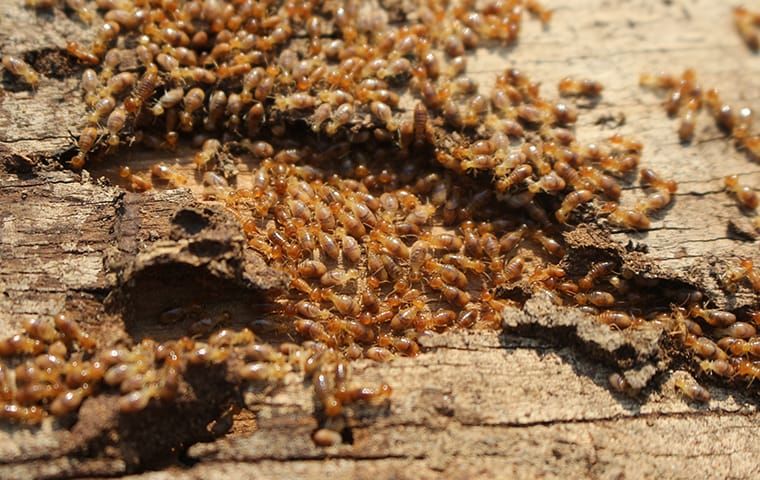
Termites raise a lot of questions the moment someone spots one — mostly because, unlike most household pests, termite damage isn’t always obvious until it’s already serious. Do they bite? Can they fly into your home? Can they really eat through concrete? This guide answers the termite questions people search most across Dubai, Sharjah, and Ajman, based on how these insects actually behave.
Quick Answers (Read This First)
- Do termites bite? Rarely, and mostly not people — soldier termites can bite in self-defense, but it’s uncommon
- Do termites fly? Only the reproductive caste (swarmers), during a limited mating season
- Do they eat concrete? No — but they can travel through tiny cracks in it to reach wood
- What causes termites? Moisture, wood-to-soil contact, and cellulose materials near or in a structure
- How fast do they spread? A mature colony can number in the hundreds of thousands and forage continuously
Do Termites Bite Humans?
Termites can technically bite, but it’s rare and generally not a health concern. Soldier termites — the caste responsible for defending the colony — have larger mandibles and may bite if directly handled or disturbed, but termites don’t target humans and won’t bite as a form of attack or feeding behavior the way mosquitoes or bed bugs do. If you’ve noticed unexplained bites and suspect termites, it’s far more likely you’re dealing with a different pest, such as bed bugs, since termite bites on humans are genuinely uncommon.
Do Termites Fly? Understanding Swarmers
Yes, but only a specific caste. Winged termites — called alates or swarmers — are the reproductive members of a colony. Once a colony matures, swarmers do have wings and fly out in large numbers, usually during warm, humid conditions, to mate and start new colonies. After landing, a swarmer sheds its wings, which is why discarded wings near windowsills or light fixtures are a classic early sign of a nearby termite colony. Worker and soldier termites — the ones actually causing damage inside a structure — do not have wings and cannot fly.
Do Termites Eat Concrete?
No — termites cannot digest or eat concrete, since it contains no cellulose. However, they can travel through hairline cracks and expansion joints in concrete slabs to reach wood or other cellulose materials on the other side. This is exactly why a concrete foundation alone doesn’t guarantee protection — subterranean termites are known for finding tiny gaps that go unnoticed until wood damage appears above.
Do Termites Eat Clothes?
Termites can occasionally damage fabric, particularly natural fibers like cotton or linen that contain cellulose, but clothing is not a preferred food source compared to wood. If fabric damage is occurring alongside wood damage or mud tubes nearby, it’s usually part of a broader infestation rather than termites specifically targeting textiles.
Why Do Termites Eat Wood?
Termites eat wood because they feed on cellulose, the fibrous material that gives wood its structure. They can’t digest it alone — termites rely on bacteria and protozoa living in their gut to break cellulose down into usable nutrients, a process detailed in the University of Florida IFAS Extension’s termite guide. This is also why termites are drawn to moist or decaying wood in particular, since it’s easier to process and often signals conditions favorable for a colony nearby.

Different Types of Termites
The two main types found in the region are subterranean (living in soil, building mud tubes) and drywood (infesting dry wood directly, no soil contact needed) — the treatment approach differs significantly between the two. For a full breakdown of each type and how to identify them, see our complete guide to termite types.
How Do I Know If I Have Termites?
Look for these signs together, not just one in isolation:
- Mud tubes running along walls, foundations, or piping
- Wood that sounds hollow when tapped
- Discarded wings near windows or doors, especially after a warm, humid evening
- Small piles of fine, sawdust-like droppings near wooden fixtures
- Doors or windows that suddenly feel harder to open, caused by moisture warping introduced during feeding
If you’re seeing more than one of these, it’s a strong signal to get a professional termite inspection rather than wait to see if it worsens.
What Causes Termites to Appear in a Home?
Termites are typically drawn in by a combination of factors:
- Moisture — leaking pipes, poor drainage, or damp soil near the foundation
- Wood-to-soil contact — deck posts, wooden fencing, or structural wood touching the ground directly
- Cellulose debris — leftover wood scraps, cardboard, or mulch piled against a building
- Nearby colonies — an existing termite population in a neighboring property or in surrounding soil
Reducing moisture and eliminating direct wood-to-soil contact are two of the most effective prevention steps a property owner can take.
Is There a Home Remedy for Termites?
Some homeowners try orange oil, boric acid, or diatomaceous earth on visible activity, and these can offer very limited, localized suppression at best. None of these remedies reach an entire colony, particularly subterranean termites operating underground, out of reach of any surface-applied product. For anything beyond an isolated, very early-stage sighting, a professional termite treatment plan is the only approach reliable enough to address the full colony rather than the visible symptoms.
How Do I Get Rid of Flying Termites?
Seeing flying termites (swarmers) indoors means a mature colony is nearby and reproducing. Vacuuming visible swarmers and sealing entry points like gaps around windows can reduce the immediate nuisance, but it does nothing to address the colony itself. A swarm is one of the clearest signs to book a professional inspection, since it confirms an active, established colony rather than just a possibility.
Frequently Asked Questions
Do termites bite humans? Rarely. Soldier termites may bite if directly handled, but termites don’t target people, and bites are not a common health concern the way they are with pests like bed bugs or mosquitoes.
Do all termites have wings? No. Only the reproductive caste — called alates or swarmers — have wings, and only during their mating flight. Worker and soldier termites, which cause the actual damage, are wingless.
Can termites really damage concrete? No, termites cannot eat or digest concrete, but they can pass through small cracks in it to reach wood on the other side.
How do I know if I have a termite infestation? Look for mud tubes, hollow-sounding wood, discarded wings near windows, and fine sawdust-like droppings. Seeing several of these together is a strong indicator of an active colony.
Is there an effective home remedy for termites? Home remedies like orange oil or boric acid offer only limited, localized results and don’t reach an entire colony. Professional treatment is needed for anything beyond a very minor, early sighting.
What’s the difference between subterranean and drywood termites? Subterranean termites live in soil and travel via mud tubes to reach wood, while drywood termites live directly inside dry wood without needing soil contact — this difference significantly affects the treatment approach used.
Think You Might Have Termites?
Understanding termite behavior helps you judge how serious a sighting is — but termite damage compounds quickly and quietly. Dominator Pest Control offers Municipality-approved termite inspection and treatment across Dubai, Sharjah, and Ajman.
📞 +971 56 968 6078 · ✉️ info@dominator.ae · Book an inspection