
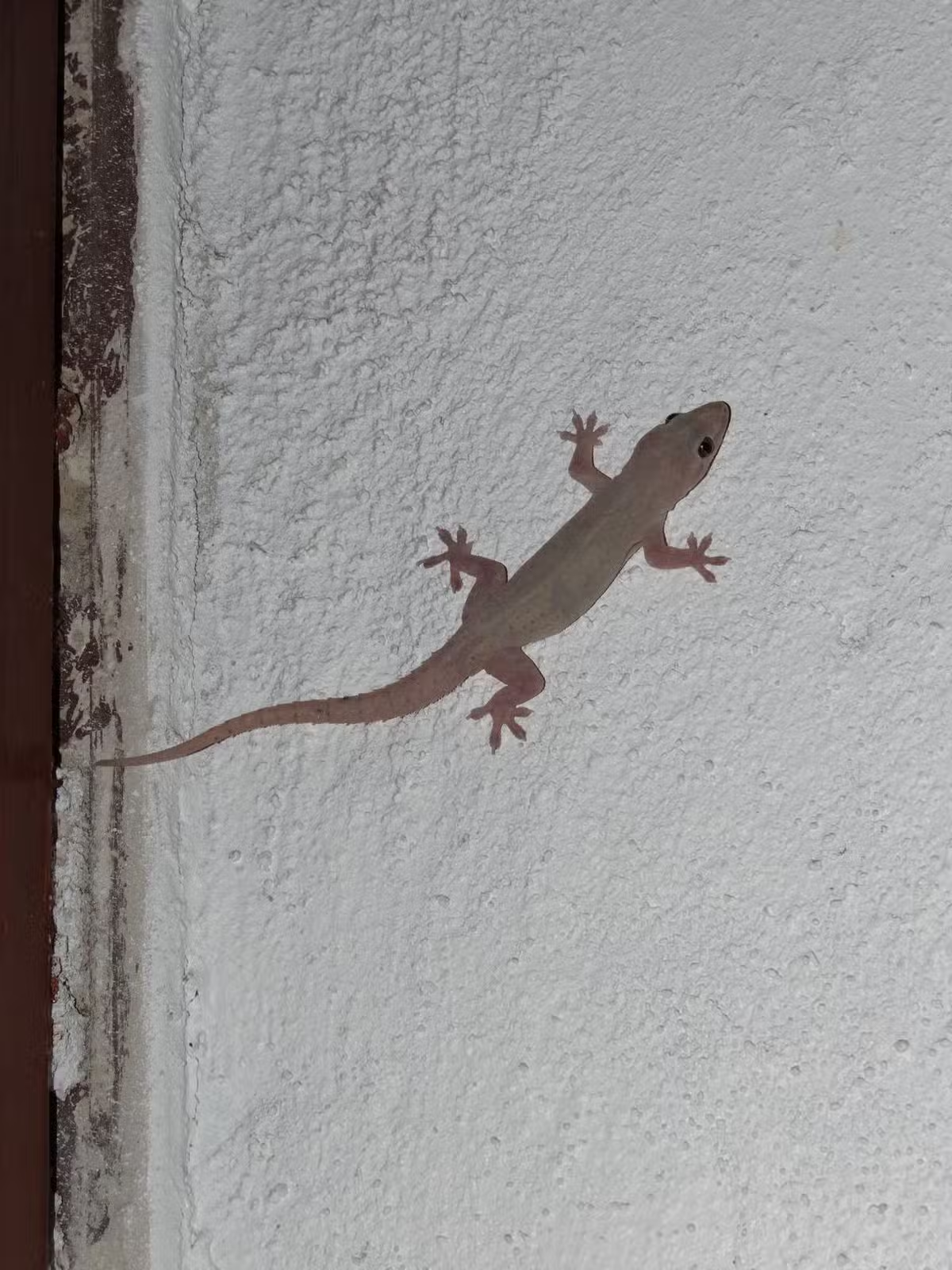
You switch on the kitchen light at midnight for a glass of milk, and something small and fast disappears behind the fridge. It happens again the next night. And the night after that. Most homeowners write this off as one stray lizard — but a lizard returning to the same spot after dark almost always means it's found a reliable food source, and in a kitchen, that food source is usually an active insect problem you haven't noticed yet.
At Dominator Pest Control Dubai, this is one of the most common calls we get — not "we have lizards," but "we keep finding droppings near the food" or "there's one by the milk every night." As a licensed pest control provider working across Dubai villas, apartments, restaurants, and food-handling facilities, our job isn't just to remove the lizard you can see. It's to find out why your kitchen became attractive to it in the first place.
Not every lizard in the UAE ends up in a kitchen. The ones that do are almost always one of two house gecko species, both well adapted to living alongside people:
The larger, more colourful lizards you might spot outdoors — agamas sunning themselves on garden walls, skinks near the pool, or the occasional monitor lizard on undeveloped land — are a different matter. These species stay outdoors and rarely make it past a doorway. If something is showing up repeatedly near your food at night, it's almost certainly a house gecko, not a garden lizard.
None of the UAE's house gecko species are venomous, and they aren't aggressive toward people. They avoid confrontation and will only bite if handled and cornered directly — rare, harmless if it happens, and not a reason to worry. The real concern with a kitchen lizard isn't the lizard itself; it's what it leaves behind.
Lizards are most active after dark because that's when insects — their primary food source — come out. Kitchens offer everything a lizard needs in one place:
If you're finding lizards near stored food, milk containers, or countertops, it's rarely random — it's a sign insects are already present in numbers large enough to sustain a lizard population, even if you haven't spotted the insects yet.
Lizards themselves don't bite or attack, but the health concern is contamination. Reptiles — including house lizards and geckos — can carry Salmonella bacteria on their skin and in their droppings without appearing sick themselves, and can contaminate any surface, food item, or container they come into contact with. According to the U.S. CDC's guidance on reptiles and disease risk, reptile contact is a recognized source of Salmonella infection, and food-prep areas are specifically flagged as high-risk zones for cross-contamination. The New York State Department of Health confirms the same pattern — contamination can spread indirectly, through droppings left on counters or containers, not just direct contact.
In a home kitchen, this means an open milk carton, an uncovered fruit bowl, or an unsealed food container near a lizard's path is a real contamination risk — not just an inconvenience.
Salmonella infection (salmonellosis) typically causes diarrhoea, fever, and stomach cramps, usually appearing within six hours to six days of exposure and lasting four to seven days. Most healthy adults recover without treatment, but the CDC's own tracking of Salmonella outbreaks linked to geckos notes that young children, adults over 65, pregnant women, and anyone with a weakened immune system face a higher risk of severe illness — which is exactly why kitchens and food-prep surfaces deserve particular care.
Salmonella isn't the only concern, either. A laboratory study of common house gecko droppings, published in the International Journal of Microbiology, found more than a dozen types of bacteria beyond Salmonella, including E. coli and Klebsiella — a reminder that droppings near food are a hygiene issue worth treating seriously, not just an aesthetic one.
Our lizard control service treats every call as two jobs in one visit — because removing the lizard without fixing what attracted it just means a new one shows up in a few weeks.
We inspect food storage areas, behind appliances, under sinks, and around drainage — the exact zones lizards use — to confirm both entry points and the insect activity feeding them.
Gaps around pipework, AC ducting, doors, and windows are sealed with durable, pest-rated materials so lizards can't re-enter through the same routes.
We apply pet- and child-safe treatments in kitchens and food storage areas — safe enough for use around where your family eats, without leaving harmful residue.
Because lizards follow insects, we treat the actual food source directly. This is typically combined with our cockroach control service or ant control service, the two most common triggers for kitchen lizard activity in Dubai properties.
We schedule a follow-up visit to confirm the sealing has held and insect activity hasn't restarted — typically every quarter for ground-floor units, restaurants, and villas near landscaping.
A single lizard near an open door isn't usually urgent. Regular nighttime sightings near food, droppings on counters, or shed skin in cabinets mean the problem has moved past "occasional" — that's when it's time for a proper inspection rather than home remedies.
My method is environmentally conscious and tailored specifically to the unique environments of each property.
Yes. We use only tested, approved, pet- and child-safe repellents and sealing methods, applied by certified technicians.
We generally recommend quarterly follow-ups to ensure the environment remains lizard-free.
Occasional sightings can happen. Persistent issues may require a reassessment of the strategy — contact us and we'll recheck the insect activity nearby.
Lizards themselves are harmless to property, but they can indicate an underlying insect problem that does need attention.
Almost every kitchen sighting in the UAE is one of two house gecko species — the yellow-bellied house gecko or the Mediterranean house gecko. Both are non-venomous and are drawn indoors by insects, warmth, and moisture, not by anything specific to your home.
The lizard itself isn't dangerous — house geckos rarely bite and aren't venomous. The real risk is Salmonella and other bacteria in their droppings, which is why we treat any repeated sighting near food as a hygiene issue worth addressing.